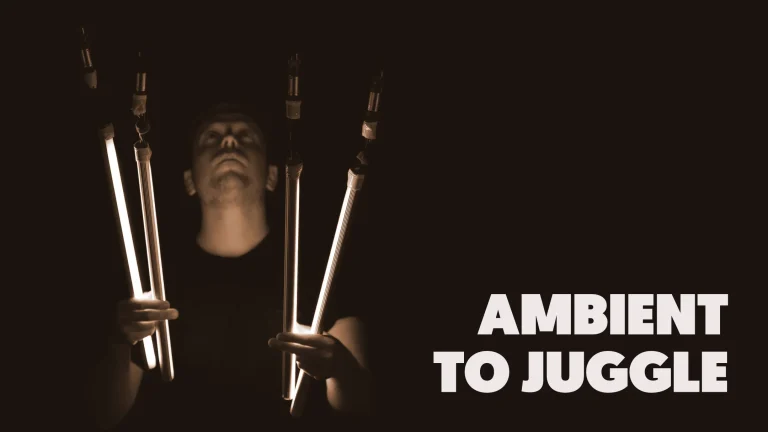
I’ve been deeply into ambient music for a while now, especially the generative systems that some sound artists use to let things unfold slowly, without repetition. At some point I started wondering if that same approach could be applied to juggling. Not in terms of copying the logic of sound, but in terms of letting movement evolve through layered inputs and slow shifts. That’s how I ended up working on something I now call Ambient Juggling, and a second branch that feels more reactive: Generative Juggling.
Inspiration
Why?
For some time now I have been quite obsessed with ambient music and the generative systems that many sound landscapers use to reach new horizons and textures. After researching a lot about generative music, I decided to do the same with juggling, and look in the direction of a couple of genres that I currently call Ambient Juggling and Generative Juggling.
THE CORE OF THE PROJECT
Bases
System Polylog is a project that has as its research center generative art in the living arts, this project has as its main reflection the alteration of human relationships by the systems that surround us, and how algorithms can generate new relationships between systems and people.
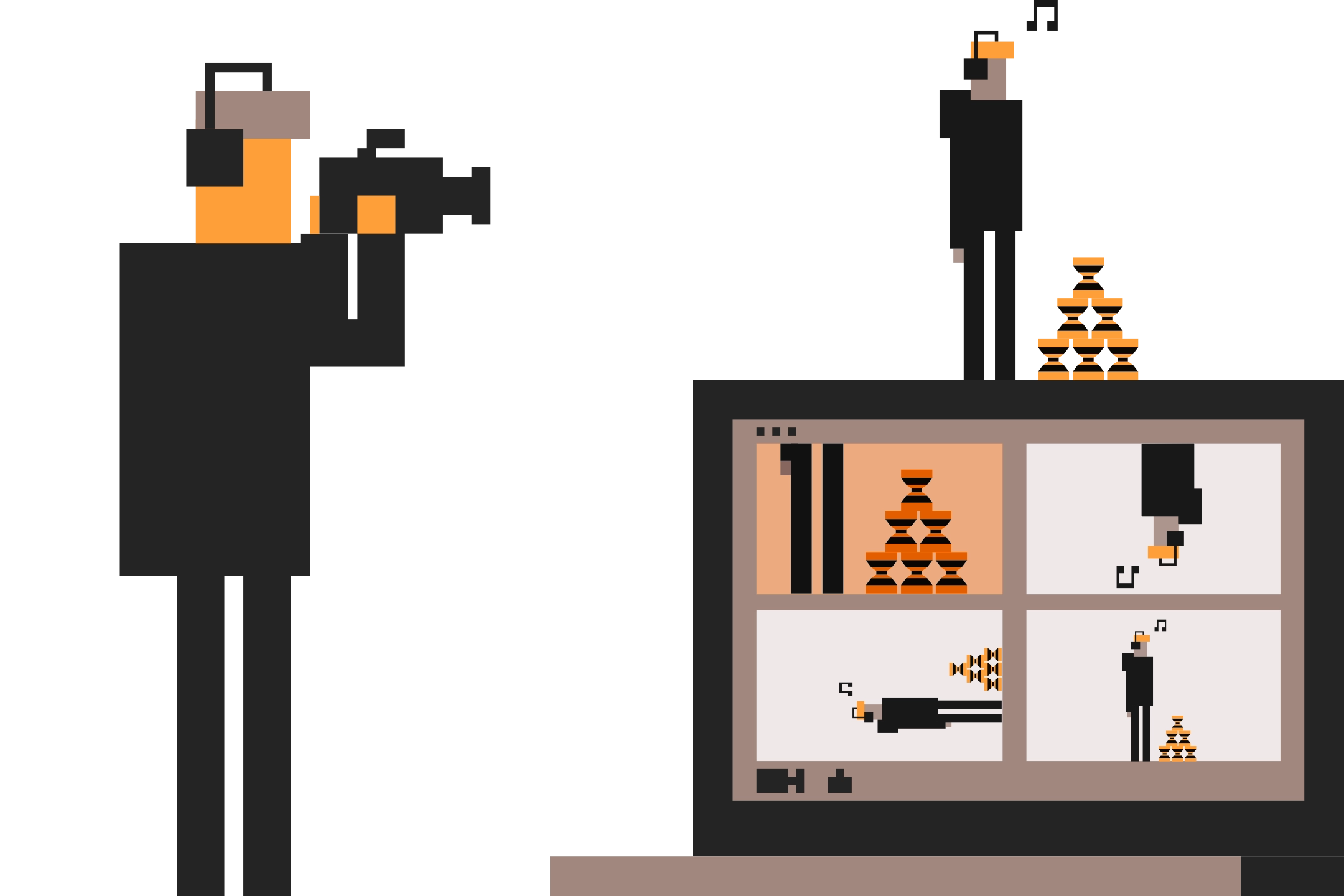
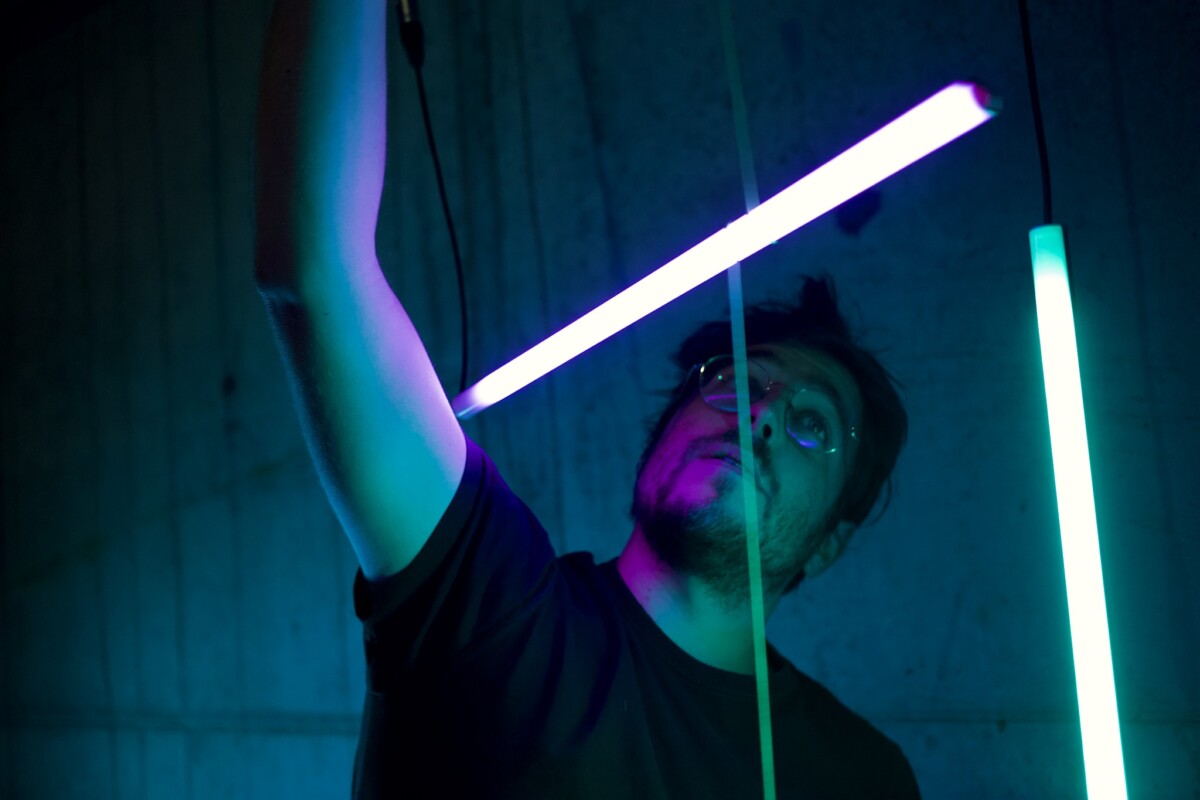
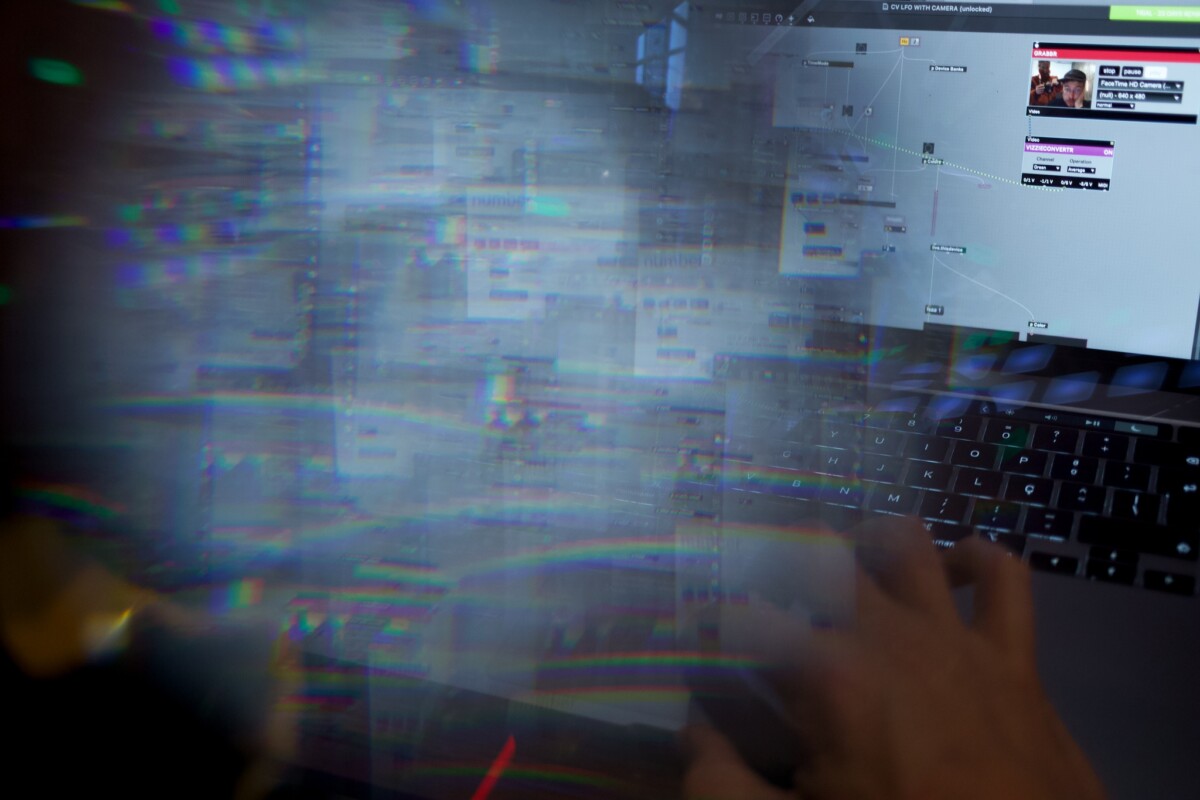
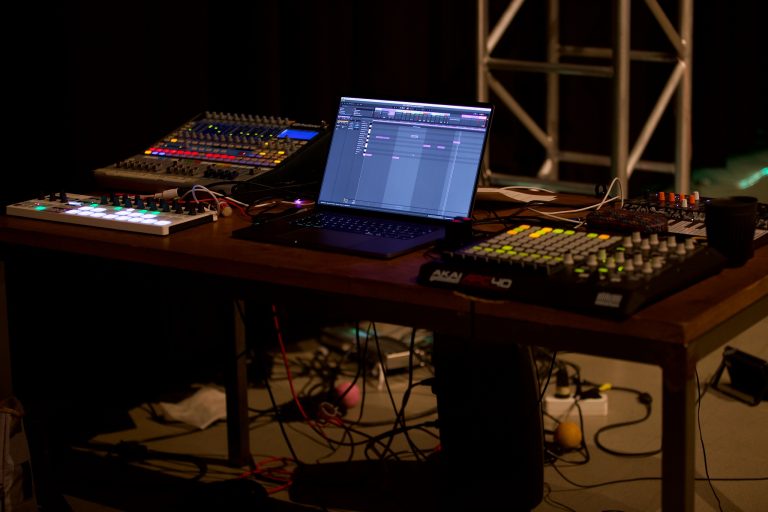
Perform an intervention with circus geeks,music, video, lighting, code, animation with the aim of forming a system that reacts and interacts, where each of the factors speaks to the others. This intervention takes place in both analog and digital format.
5 min Video
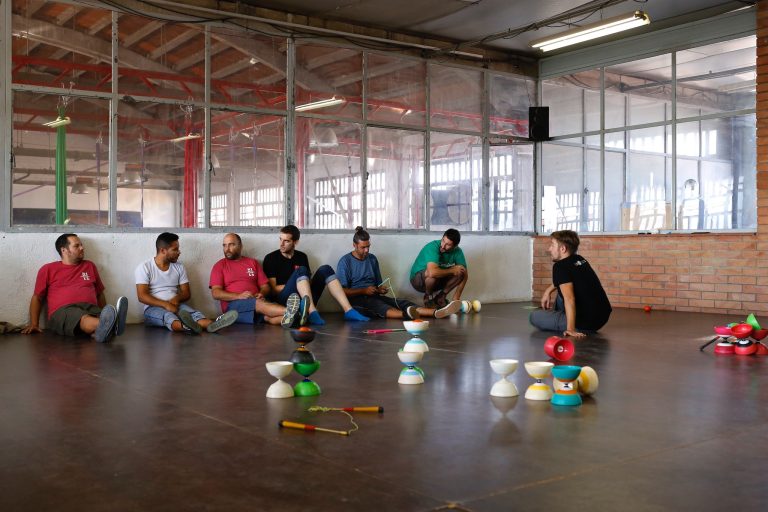
Testing in la Central
Two ways of juggling a system
Ambient Juggling is an unpretentious juggling, it is an act that has as its engine the constant dissolution, it exists without having to stand out with respect to the environment.
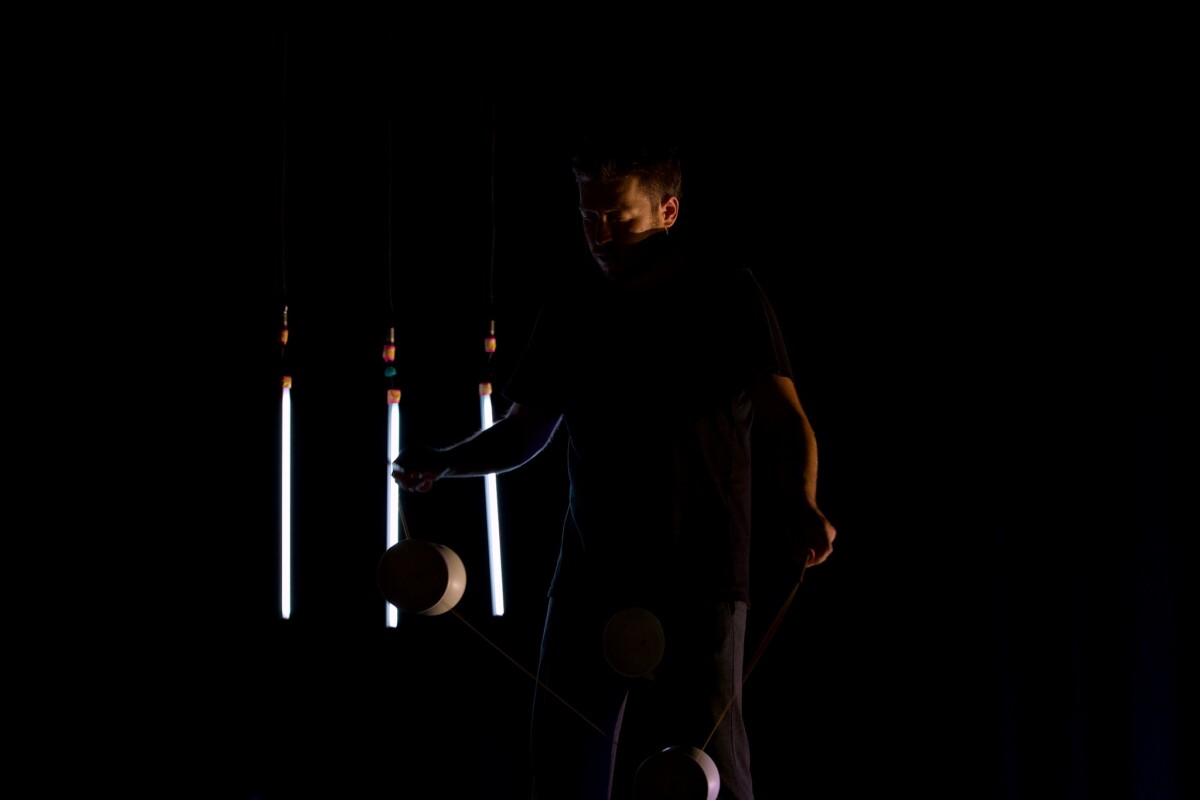
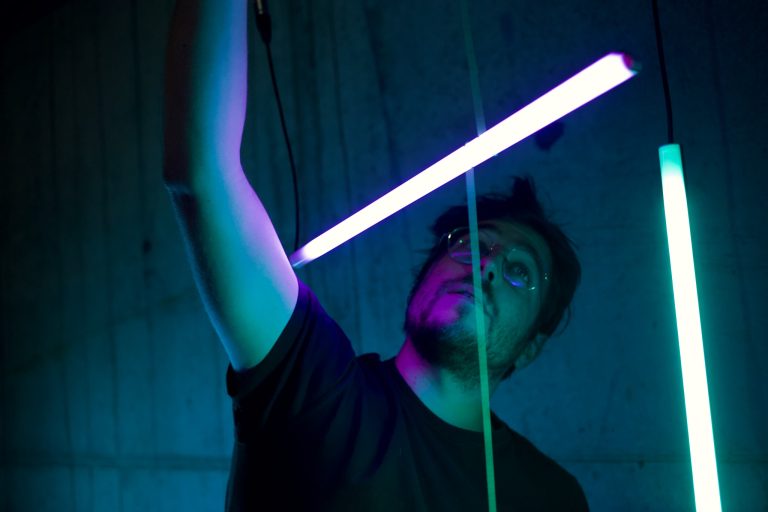
Generative juggling goes a step further, trying to understand the whole environment as a system that gives inputs and receives stimuli, and based on all these parameters it evolves towards unplanned places, but they can be bounded.
Between System Polylog and Polychromatic Void
Built through relation
System Polylog sets the framework. It holds the questions, the logic, and the processes that guide the work. Polychromatic Void is one of the places where these ideas become practice. It focuses on generative juggling and builds live systems where objects, code, sound, and light influence each other continuously. The relationship is not fixed, but active. Each run is different. What holds it together is the structure proposed by System Polylog, and the way Polychromatic Void keeps pushing it into motion.