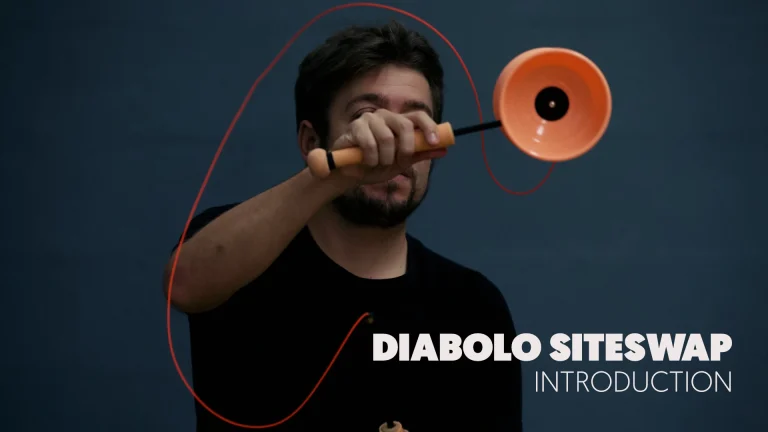
When I say Diabolo Siteswap, I start from siteswap as the shared language of juggling: a transpositional notation that sets how long an object takes to come back to be thrown again. A sequence describes a structure in time, and from there you can build different physical readings of it.
What interests me in this lab is widening that frame, because the diabolo, the way I play it, does not stop at crossing throws. In some notations (Diabology’s, for one) the values 2, 4, 6, 8 are read straight away as crossing throws. That shifts the problem too far for me: it simplifies the language at the cost of losing parallel throws and patterns where a diabolo can go out and come back to the same hand.
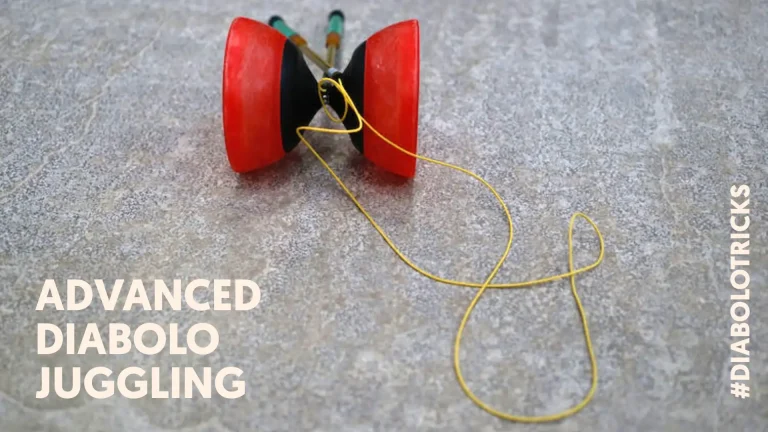
What I propose takes both hands into account explicitly and brings string time into the writing. The string comes in as a controlled surface (hold, drive, return), and that makes it possible to describe two-channel patterns, parallel ones, and combinations where hand roles and returns are not left to be assumed.


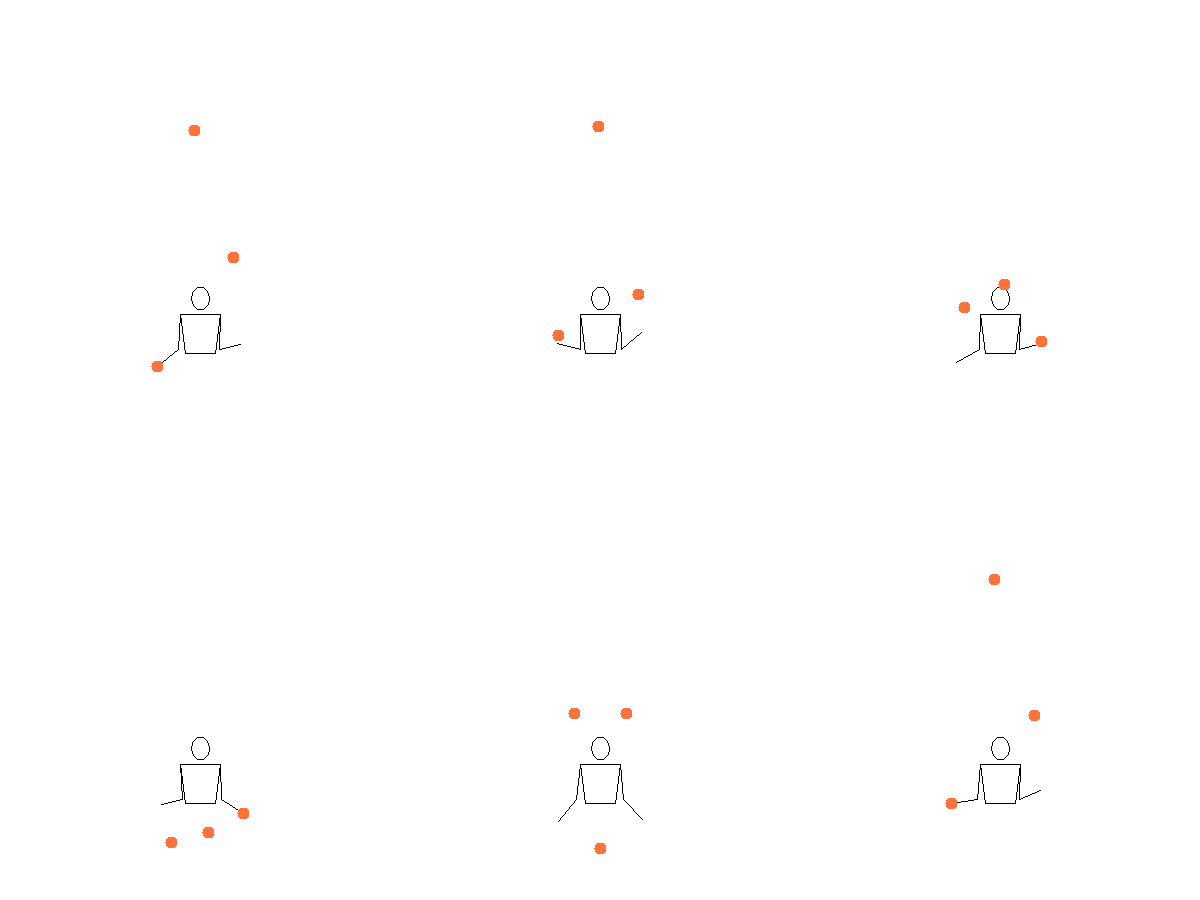

In practice I keep siteswap as the structure in time and add a layer on top to mark hand roles and returns through the string. I use F for those returns (along the lines of the forced bounce), which lets me tell apart the kinds of dwell on the string.
On that base I can write patterns more faithfully, compare variants and build progressions towards more complex material.
There are already applications of siteswap to the diabolo built on the “one-handed juggling” model: one throw per beat, a regular rhythm, and the numbers as flight time or height. It is a useful base for describing aerial carousels and plenty of combinations.
In motion
Siteswap applied to the diabolo
Objectives
Getting the diabolo down on paper
Being able to write down what we do
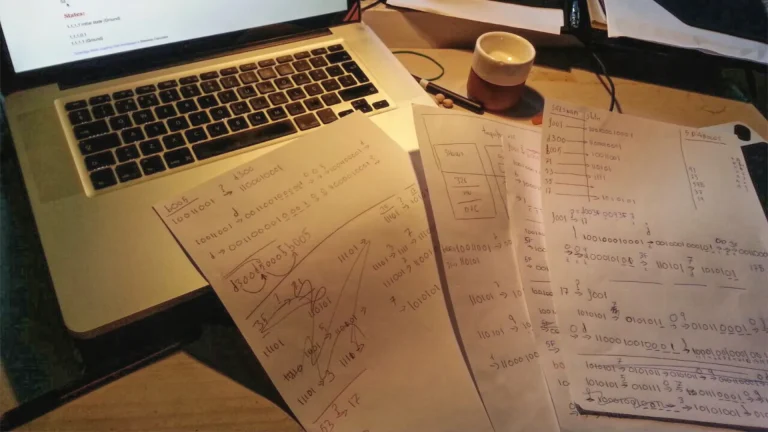
I got into this because there is no way of writing down most of what I do. I would like to reach the point where whatever turns up in a training session is down in black and white the same day, without having to make up half a notation every time.
So that someone else can read it and make sense of it
A pattern that only travels by word of mouth goes with whoever can do it. Every symbol has to be something a person who was not in the room can pick up, and if that person spins it, the symbol holds.
Keeping it all gathered in one place
I keep the research at diabolositeswap.com so it can be followed from top to bottom and added to as things come up. Anyone who wants to have their say from the outside should find the door open.
Building progressions towards the hard material
With the patterns written down you can see straight away which one leads to which, and that is where the progressions I use in workshops come from, the ones that get you where you cannot get head-on.
So that we all write it the same way
None of this is final. A notation is worth something as long as everyone writes the same thing with it, and the day a symbol will not hold a new pattern, it gets changed and the documentation gets updated. If everyone goes their own way, before long we will not understand one another.

Full research and documentation
Want to go deeper?
At diabolositeswap.com I keep the whole research behind this adaptation: the notation (asynchronous and synchronous), how to define the string (_F) and examples for 1, 2, 3 and 4 diabolos.
You will also find a section on 1 diabolo where the naming takes the sticks into account: what each hand does and how the string enters the writing when the pattern goes through it.
On top of that there are transition tables, a passing section and a guide for setting up Juggling Lab so that it renders diabolo patterns.
I decided to put it on a separate site so the documentation stays in order, is easy to follow and can be updated with new material.
If you would rather work on it in person, I teach it in workshops.