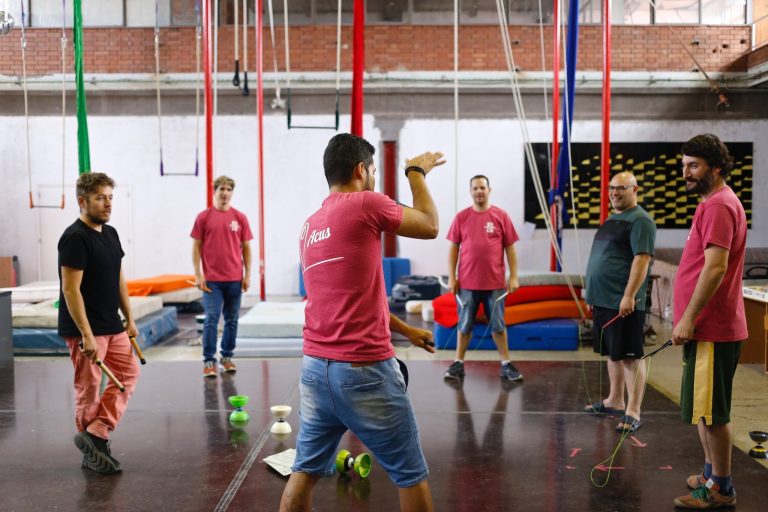
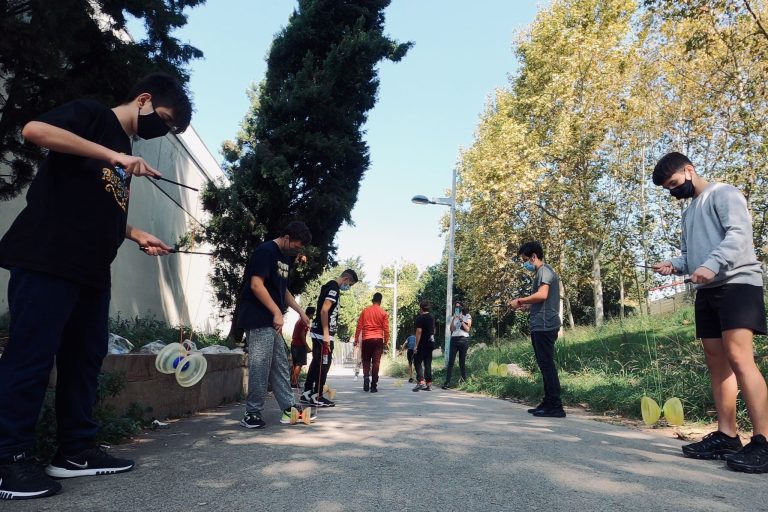
During the 2020-2021 school year we took part in Creadors EN RESiDÈNCiA, a programme run by the Institut de Cultura de Barcelona (ICUB) and the Consorci d’Educació de Barcelona (CEB) to bring contemporary work into state secondary schools. We worked with the third and fourth year ESO students at Institut Comas i Solà, in Trinitat Vella, with their teachers Joaquim Cubarsí Romans and Ruth Pleguezuelos alongside us, and Marissa Paituví, from La Central del Circ, as mediator.
THE CORE OF THE PROJECT
Juggling to connect and transform
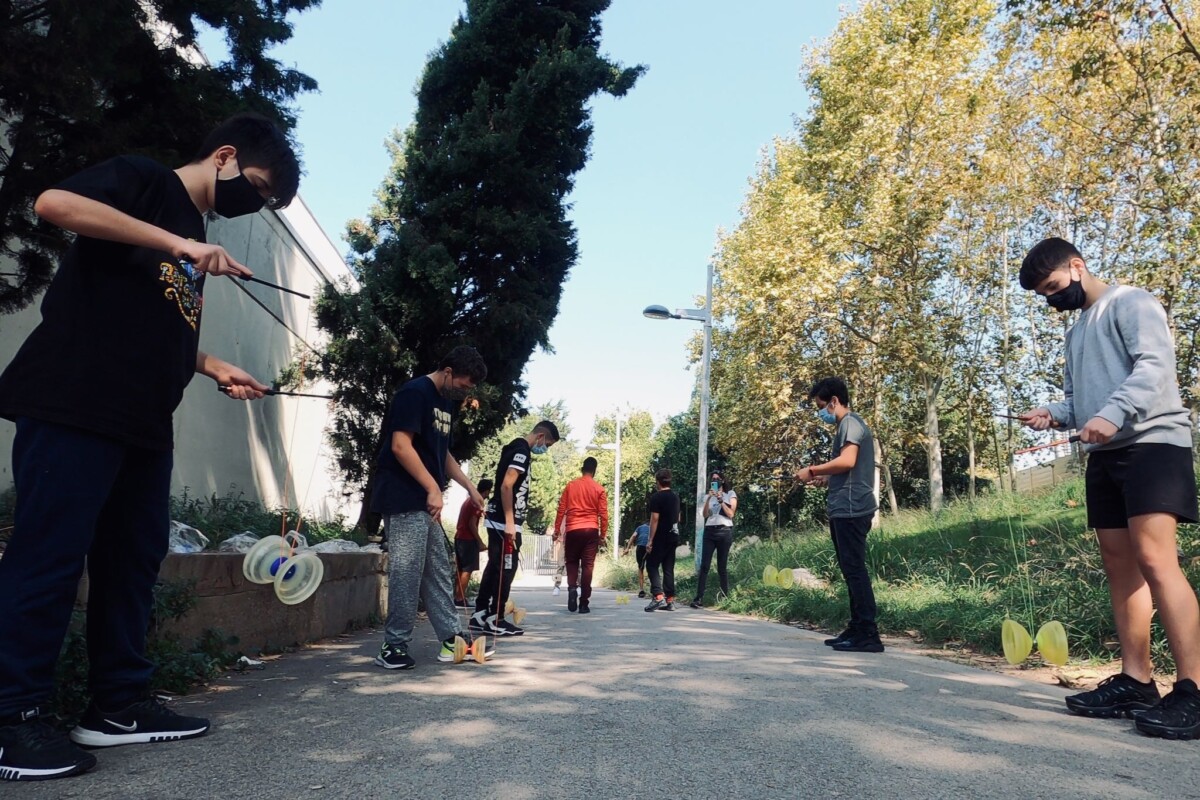
En Residència started from one clear idea, that juggling should work as a way of connecting with your surroundings and of working as a group, and from that starting point we went on bringing juggling together with video and web design.
We took the decisions that shaped the project together, and we used the spaces of the neighbourhood as our working place, so Trinitat Vella became their meeting point and the place where they expressed themselves, where they shared what they were doing and tried things out together.
Notes on publishing content
The digital side
One of our main aims was to change the attitude they had towards these tools, because they use Instagram, YouTube and Twitch every day and hardly any of them had ever used them actively. We put our effort into the web, which is a tool that can be of use to them later on.
We set up a collaborative website with WordPress where we gathered the videos, the photographs and the reflections of the project, and there they saw from the inside how a digital space is kept in order and how you work in it, which is a way of working that will serve them in any job.
With that they went from consuming to understanding how these tools work, and they gained the independence to order and present their own ideas, and for us that shift is worth more than anything else that came out of the project.
Self-sufficiency
We build our own equipment
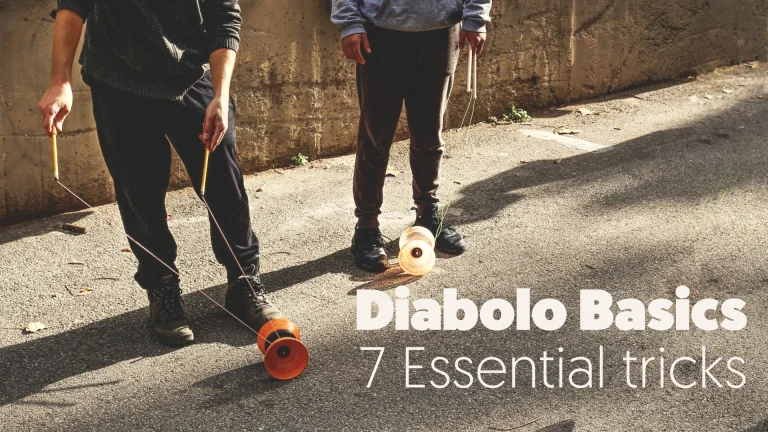
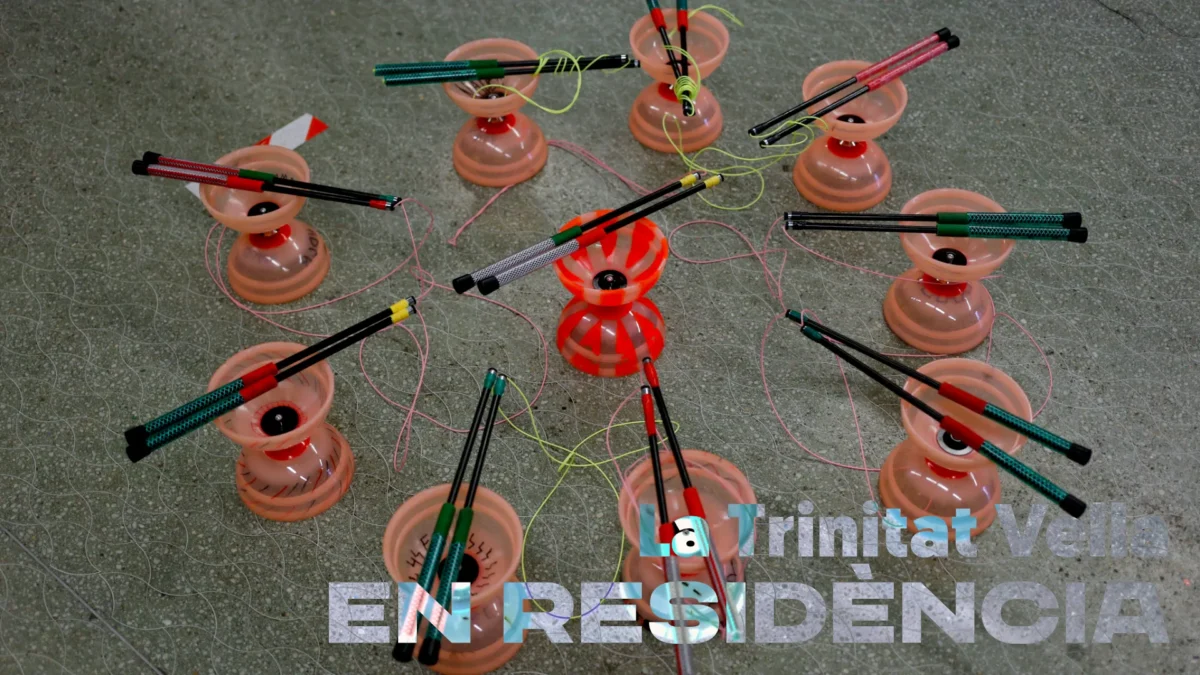
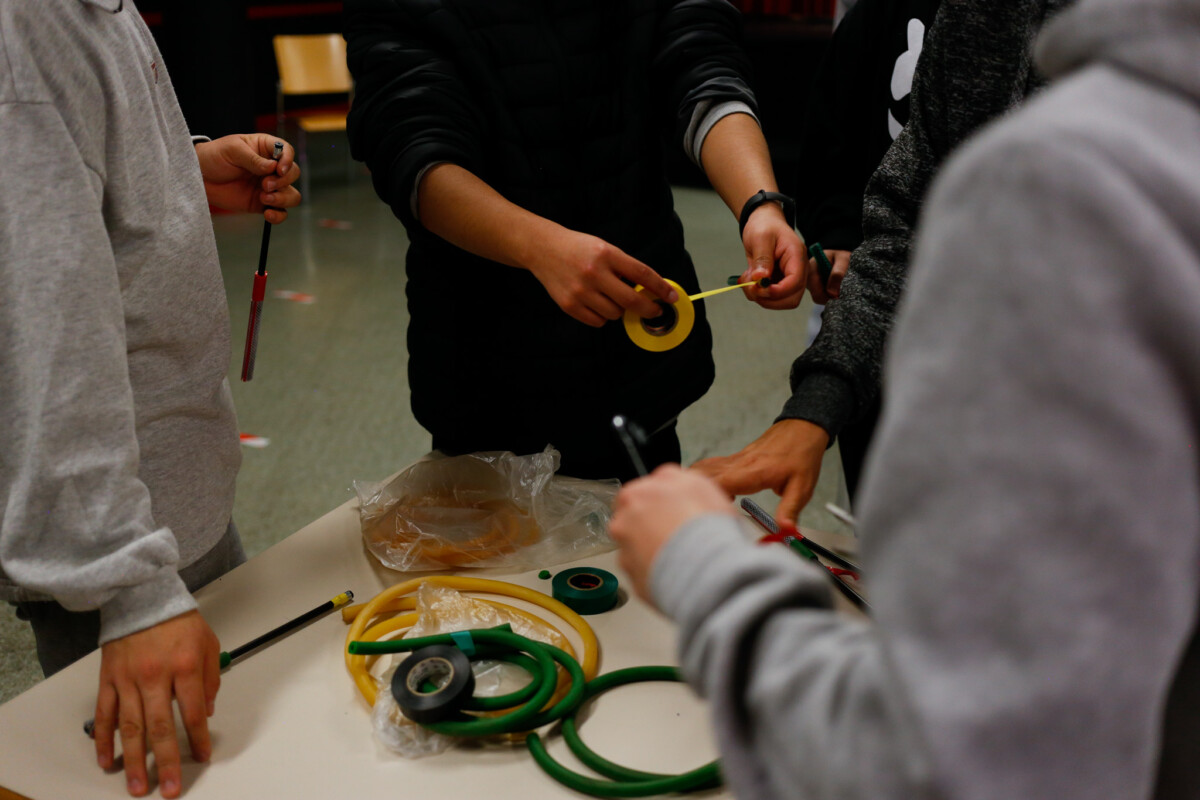
During the project the enthusiasts followed a tutorial by Dídac to design and make their own diabolo sticks, and having built them themselves brought them closer to juggling in another way, because the equipment became genuinely theirs.
From then on they looked after their gear more carefully, and juggling became something that carried work of their own inside it.
Collaborations in the Henhouse
The diabolo as a collaborative game
During the project we noticed how keen they were on rap battles, improvisation contests that go down very well among young people and that encourage wit and invention, although a strong charge of confrontation, contempt and rivalry often comes with them.
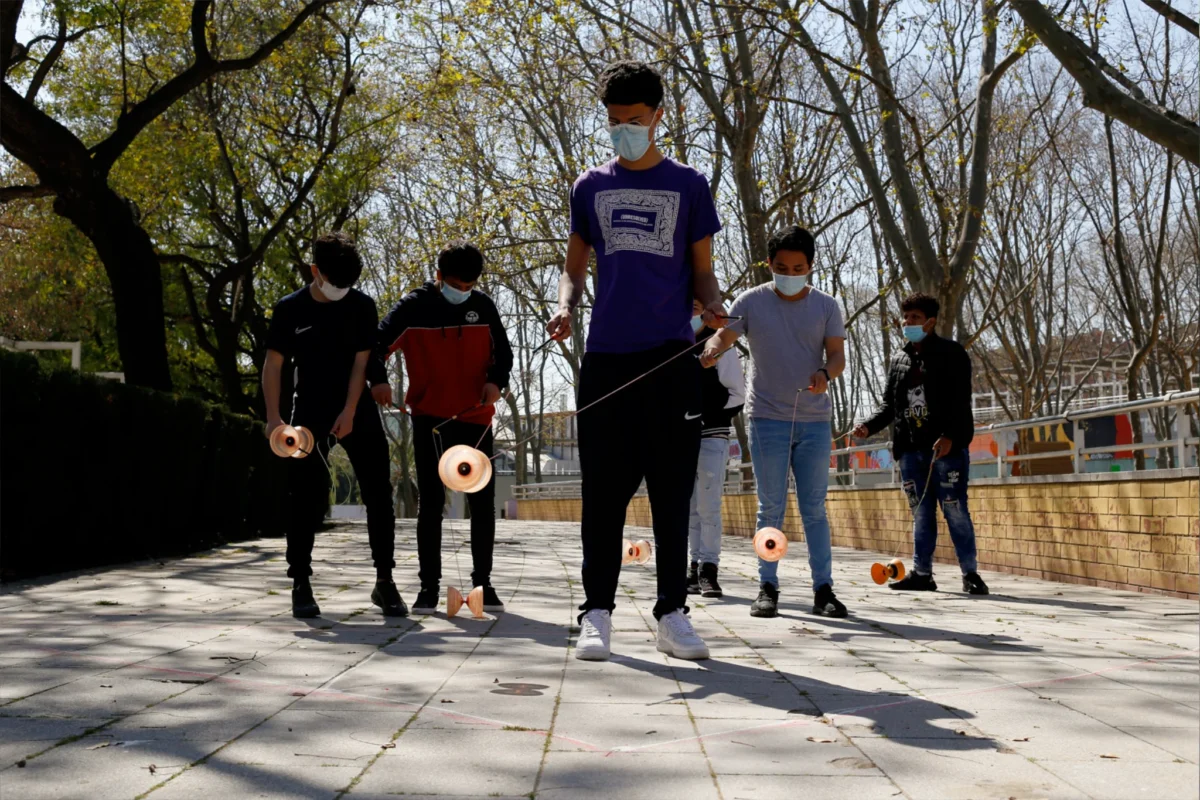
We took from that dynamic what was useful to us and turned it towards collaboration with Mosaic, a diabolo game played as a group that asks for spontaneity and trust, and that keeps the playful, challenging edge that drew them to the battles.
They saw that what the person next to you offers is not there to be beaten, and that if you take it and add your own grain what comes out belongs to everyone. The urge to compete was no longer there, Mosaic had arrived to help them cooperate, adding up instead of leaving anyone behind.
Collaborations on Paper
The neighbourhood through the diabolo
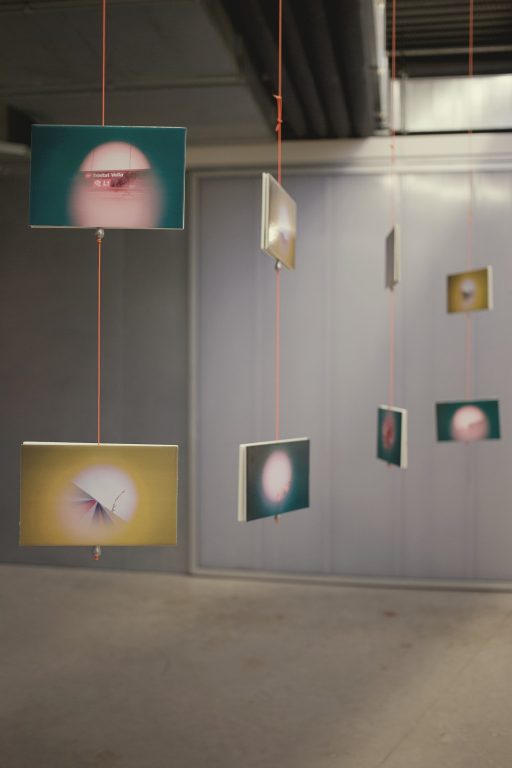
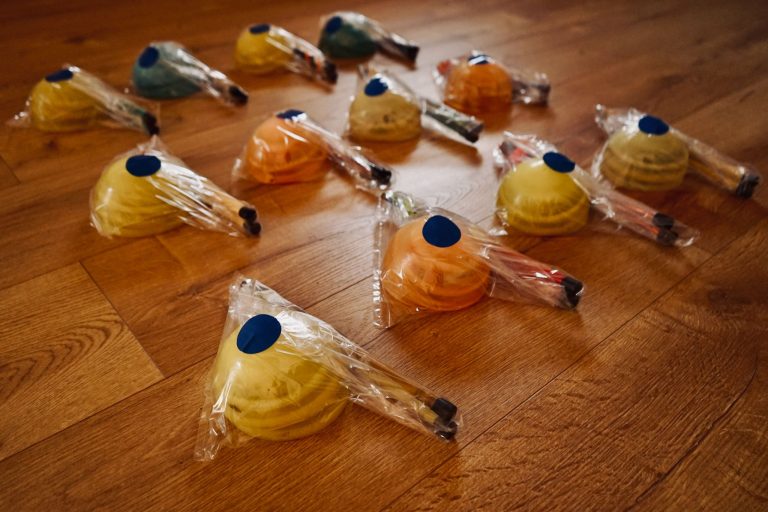
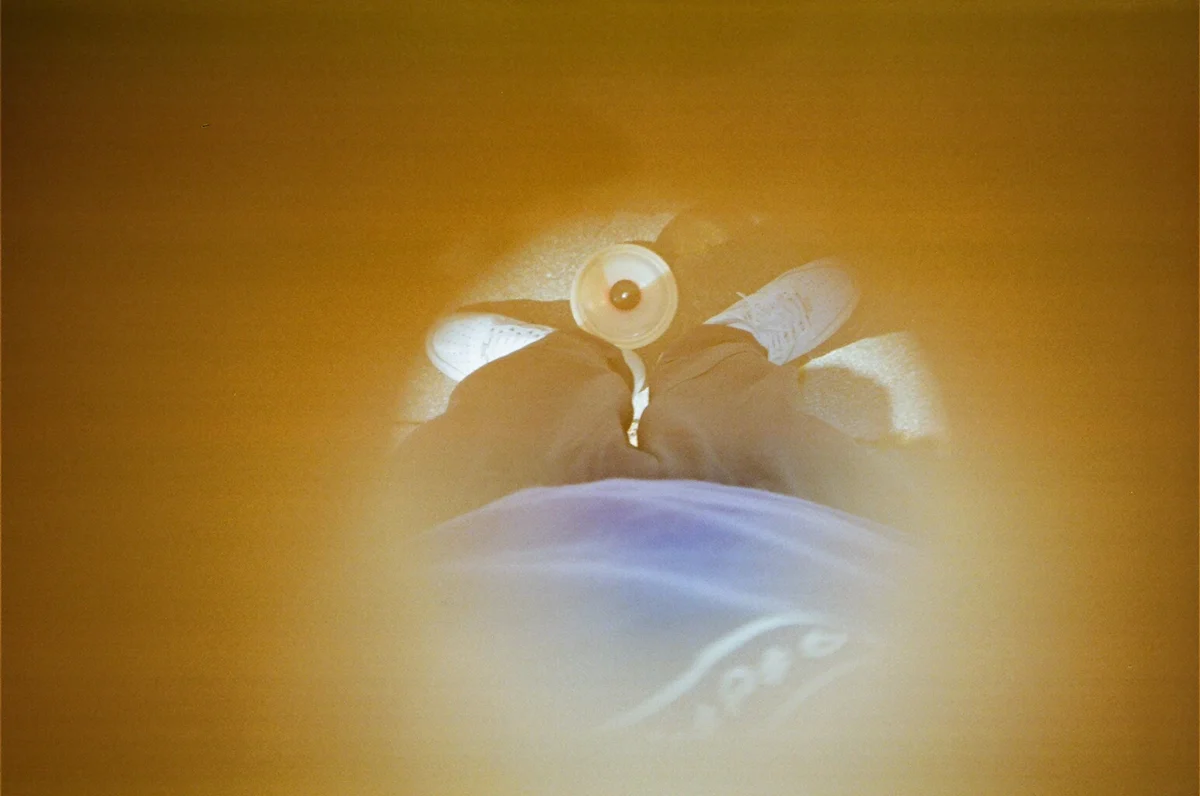
The people at YANA, a magazine devoted to juggling, took an interest in Teresa’s work and they met to look at possible collaborations. In the conversation she told them about the project we were running at En Residència and about how the diabolo could be used as the lens of a single-use camera, the Magnifying Diabolo, and from there came the idea of putting it into practice with the enthusiasts.
With this photographic setup the enthusiasts went out to photograph Trinitat Vella, and looking through the camera and the diabolo invited them to look at details, corners and places they had always seen and had never once noticed. Once developed, we sent the photographs to YANA and the editors chose a few of them to publish alongside a tutorial for building the kit and taking pictures through the diabolo, in case other jugglers anywhere in the world wanted to do the same exercise.
Collaborations in the Street
From process to action
When we take on a project of this kind we try to avoid final presentations being compulsory, since putting someone on stage at a fragile moment is not always a good thing, and for us the process and the blog were already part of the result. Documenting the process, recording the videos, editing them and publishing them on WordPress is already a way of giving the project a form, and it more than met the aims we had set ourselves.
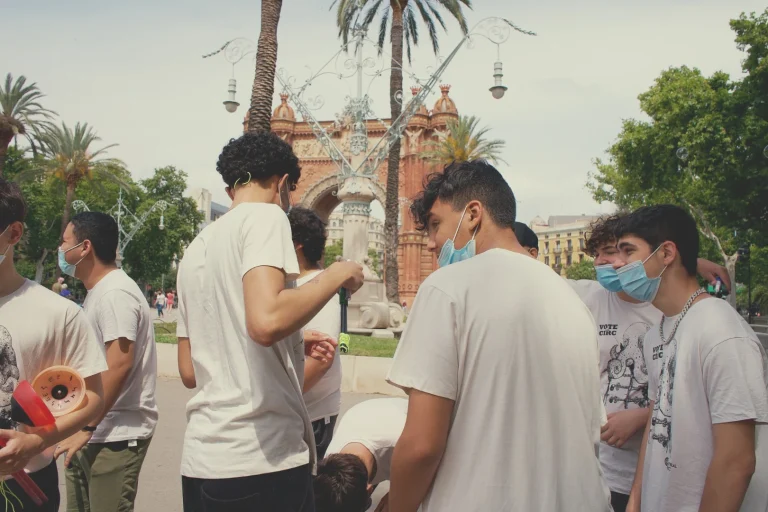
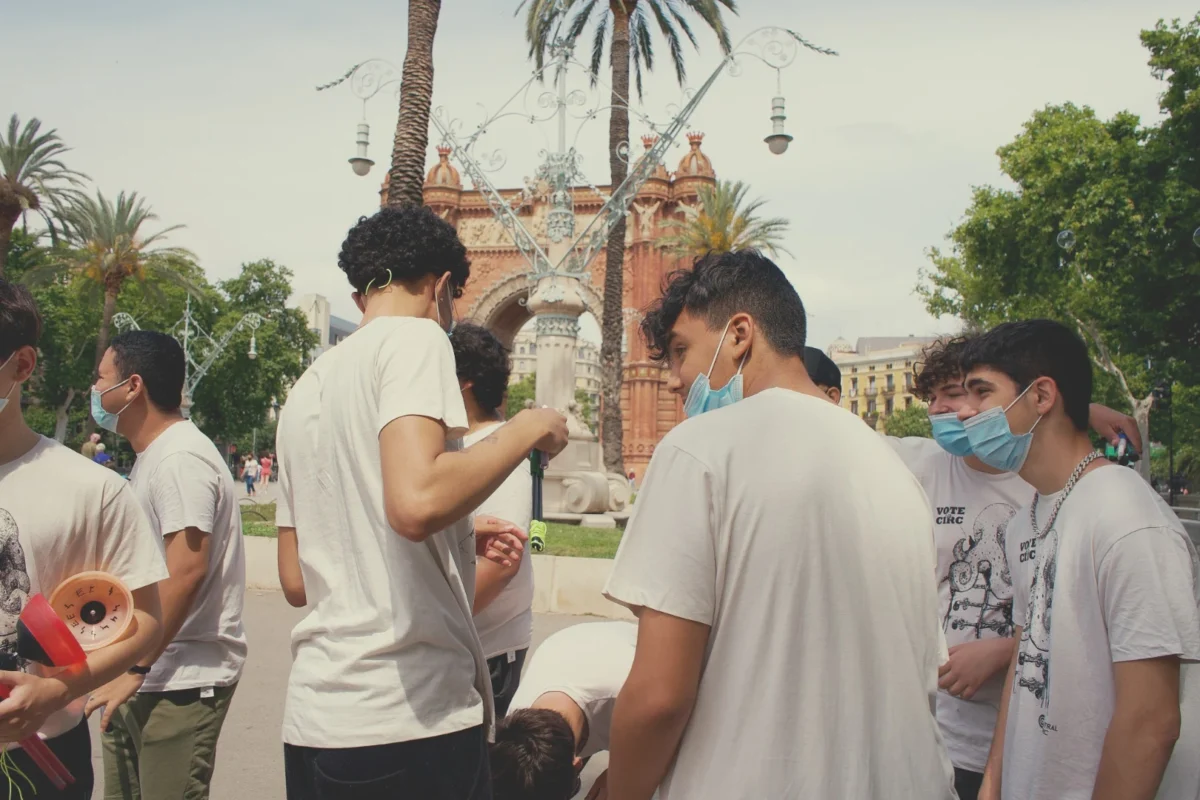
Even though we did not think it needed to go to any stage, one day they came up to us to ask whether they could perform in the neighbourhood, and after turning it over a couple of times we proposed going out with the Mosaic game around various spaces in Barcelona. Marissa, who was the project’s mediator, took care of the permits and found bicycles for everyone, and on the last day of the project we put together three roving performances at different points in the city.
The initiative had come from them, and from the day they came to ask us for it right through to the last, cycling from one point of the city to another, they carried an idea of their own all the way, and in that you could see everything they had changed and how much they had committed to it, wanting to collaborate and to make a team.
A collaborative project made possible by many hands
This project would not have been possible without the participation and commitment of:
- Enthusiasts: the students at Institut Comas i Solà, for their enthusiasm and dedication.
- Teaching team: Joaquim Cubarsí Romans and Ruth Pleguezuelos, for their guidance and steady support.
- Mediation: Marissa Paituví, from La Central del Circ, for connecting and bringing things to life.
- Institutions: the En Residència programme, run by the Institut de Cultura de Barcelona (ICUB) and the Consorci d’Educació de Barcelona (CEB), for giving the project space and a voice.
- Photos: Teresa Santos
Thanks to everyone and every organisation that made it possible.