Juggling can be play, structure, rhythm, or collaboration. But it often remains just a one-time activity. At NUCLI, we propose giving it continuity, understanding it as a tool to think, communicate, and move with awareness.
It’s an umbrella that encompasses different approaches, depending on the context and interests: from functional work to connections with mathematical thinking. Always with the same foundation: a technical practice that invites you to observe, try, and build.
Discover everything you can learn through movement.

open days or short workshops.
Vector » Introductory Juggling Session
This session is a direct starting point to experience juggling as a tool for concentration, coordination, and shared play. It’s short, clear, and dynamic. Designed to spark interest and provide first tools, for both children and adults.
We start with simple but powerful techniques that help position the body, better observe what’s happening, and build meaningful sequences. Each exercise works on aspects like rhythm, trajectory, and mindfulness.
It works very well as a one-time activity, during a special day, or as an introductory showcase. It can also be the first step in a longer cycle.
When abstraction becomes tangible
Gradient » Mathematics and Juggling
This line of work opens the door to analyzing juggling as a system. We use siteswap patterns to make mathematical structures visible: sequences, cycles, variations, and regularities. Every number, every throw, has a function.
With a combination of calculation and body, we build patterns, observe symmetries, measure periods, and explore transformations. The analysis goes hand in hand with practice. We don’t just understand the patterns—we touch them, try them, and adapt them.
It works very well as a complement in STEAM projects, especially in stages where abstraction or visual data representation is being developed. It’s useful for both teachers and student groups, with flexible formats that can be applied directly in the classroom.

A tool for the classroom
FLUX » Functional Juggling
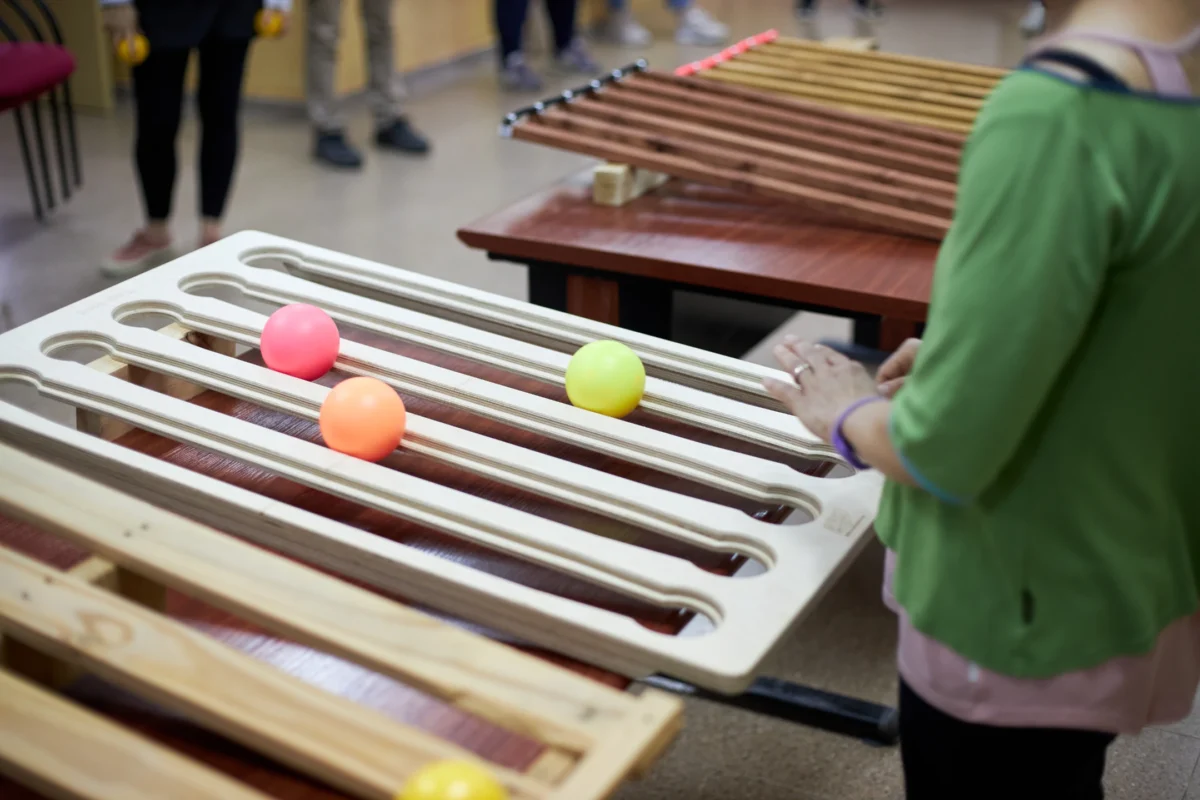
This line of work focuses on the educational value of functional juggling as a tool for active learning. There’s a central tool: the Juggle Board. And a clear objective: to keep it at the center and continue working with it beyond the workshop.
The session combines two layers: practical training for teachers and direct application with students. The exercises are accessible but with a clear intention. We carry out patterns that generate attention, trust, and rhythm.
We explore how to activate the group, how to structure a session using the Juggle Board, and how to incorporate juggling into educational routines. The teacher doesn’t just observe—they get involved, try things out, and leave with concrete resources to keep working in the classroom.
Applications in the classroom
Objectives of the NUCLI workshops
Cross-curricular work
The exercises connect with various areas: body expression, mathematics, physical education, or tutoring. They can be adapted to suit the school project.
Competencies in action
Situations that engage skills like coordination, concentration, and teamwork. With sequences built from attention and repetition.
Open and adaptable practice
Flexible methodology, designed for different levels and ages. Allows work with the whole group or in small teams, respecting individual pace and abilities.
Frequently Asked Questions
What type of workshops do you offer?
We have different formats depending on the group’s goal: a short session to get started, lines oriented towards mathematics (GRADIENT), and others focused on coordination and inclusion (FLUX).
What age groups is it for?
It’s designed for upper primary and secondary levels, but we can adapt the proposals to also work with early childhood education or adults.
How does it fit into the curriculum?
The workshops activate competencies such as autonomy, fine motor skills, attention span, and logical thinking. They can also be integrated into STEAM projects, artistic areas, or globalized learning.
What do we need to host the workshop at our school?
You just need a clear space (classroom, gym, or courtyard). We bring all the materials and adapt the session to the number of participants and the group’s context.